Leave the Leaves
Nothing in nature is wasted—a lesson in re-cycling.

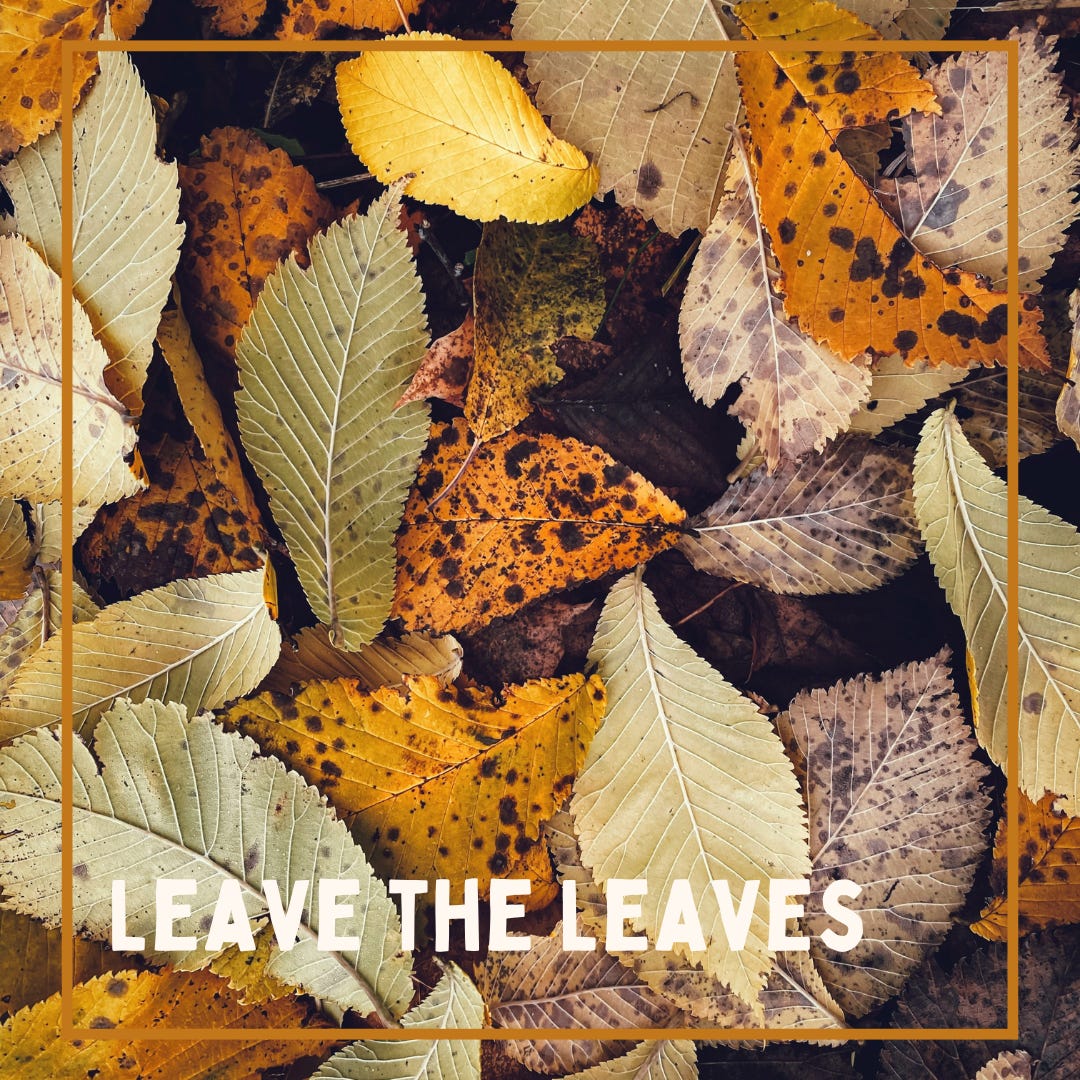
With each step, crisp autumn leaves crunch underfoot. They gather in featherweight piles, on the sidewalk, beneath the hedge, along the edges of the spaces we inhabit. Each one is a different shape; some are notched, some lobed, and some are as smooth and elongated as a birchbark canoe. Their painterly shades of yellow, red, and brown will soon fade to a uniform, tawny grey, the color of weathered wood.
I don’t know anyone who doesn’t love that sound, the dry crackle of crushed fallen leaves, or the golden fan of maple leaves stretched over the blue dome of a midday sky. The sensory experience delights us in part because it’s brief. Once the trees stop producing chlorophyll—the compound that makes them look green—the remaining chlorophyll starts to break down, revealing the leaves’ underlying pigments. The transition lasts only a few weeks, and soon cold, gusty winds tug the last fading leaves from their branches. They drift to earth and gather in soft, low mounds easily disturbed by wind or foot.
I suspect few of us spend much time thinking about leaves outside the shoulder seasons. In spring, we anticipate their arrival with an almost greedy need to witness earth’s rebirth. In fall, we marvel at the display of their rare, extraordinary colors. In summer, we may admire the leaves on mature trees that shade and cool our homes, but they also improve air and water quality, increase property values, provide essential food, shelter, protective cover, and nesting sites for wildlife. Leafy trees also offer aesthetic, social, and emotional value, creating more pleasant and tranquil environments for people.
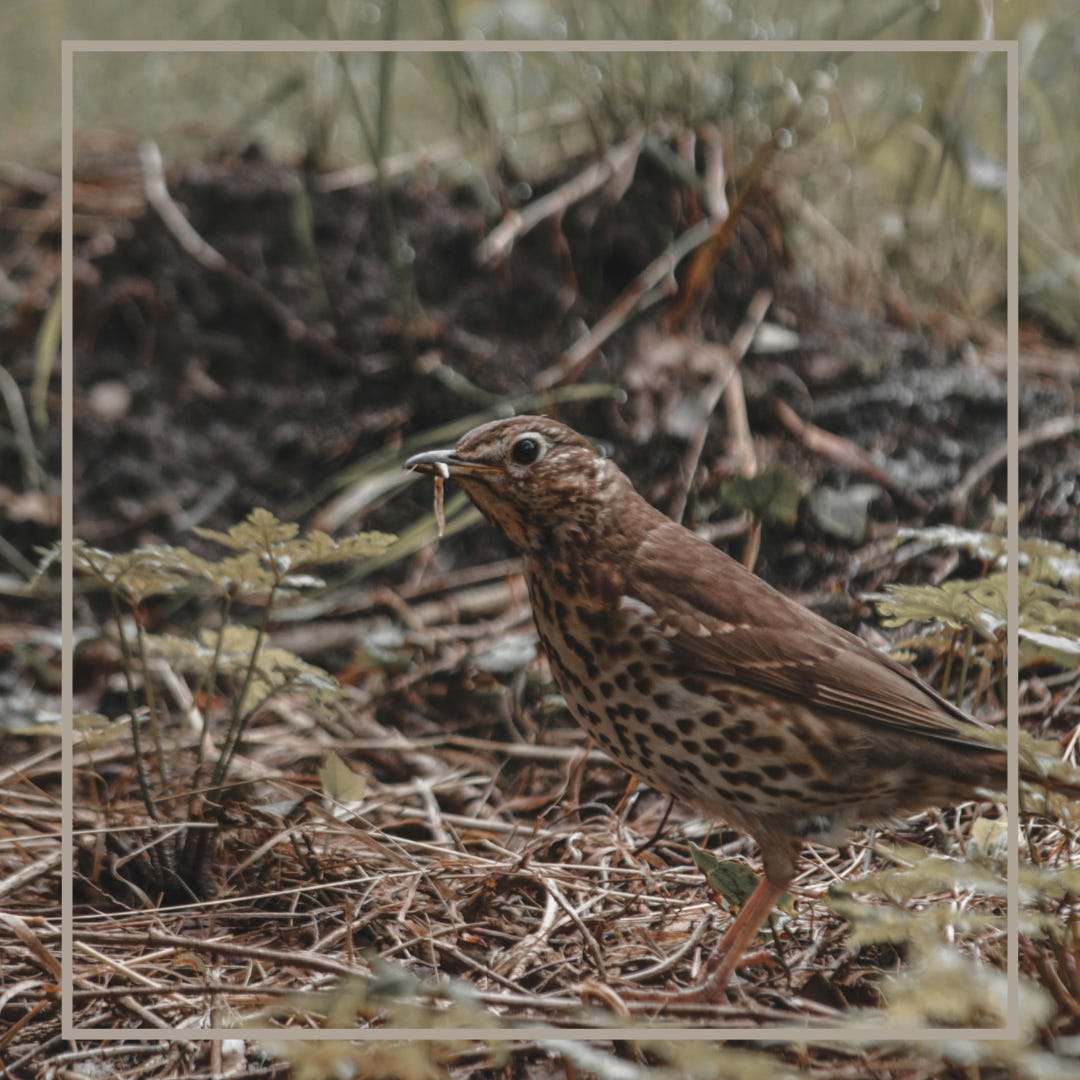
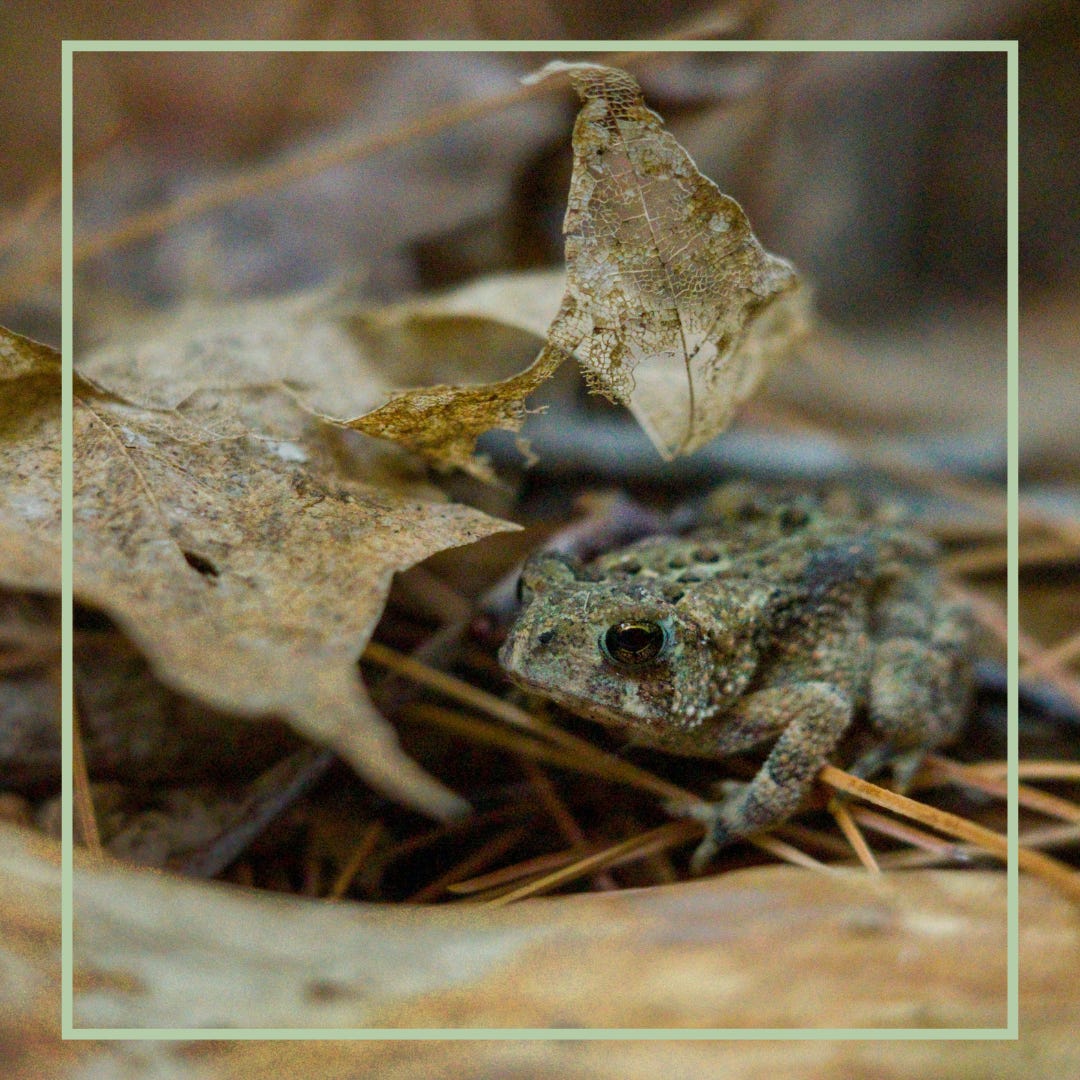
But in winter, once the leaves have fallen, they take on new, and equally essential roles—many of which are largely forgotten, ignored, or unappreciated. They create air pockets, creating a vital insulating layer that protects small animals, including lizards, birds, turtles, salamanders, frogs, and invertebrates within or underneath. Many native bees overwinter in the soil, in shallow nests, protected by a layer of leaves and other plant material. Thrushes, sparrows, and other songbirds forage amongst the leaf litter. In winter, take a look at the bare branches and notice the basketball-sized tufts of dried leaves clinging there like dried fruit—those house nesting squirrels. If you’re lucky, you might notice the inhabitants carrying clumps of dried leaves to add to it throughout the year.
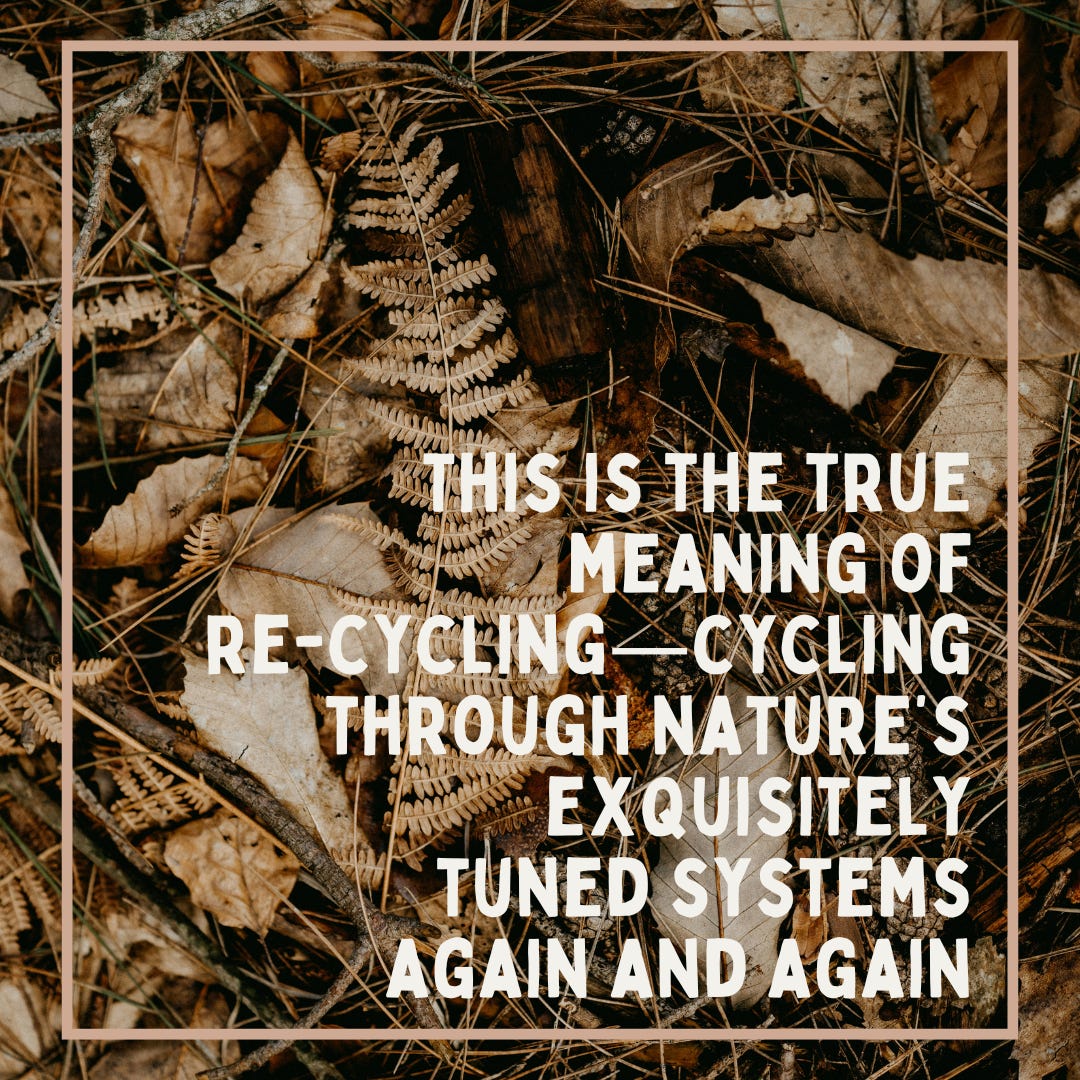
As leaves decompose, they create a loamy soil rich in essential microorganisms that nourish the earth, as fertile as any compost. By restoring natural organic matter to the soil, they reduce the need for added fertilizers. A layer of decomposing leaves also creates a natural mulch that can suppress unwanted plants. Why spend money on mulch and fertilizer when there’s a free abundant source available in just about every yard?
Removing leaves isn’t just robbing your garden of nutrients and destroying wildlife habitat by taking away options for shelter; there’s a good chance you’re tossing out many critters that have already settled in! Many moth and butterfly caterpillars and the larvae of fireflies overwinter in fallen leaves before emerging in spring. By ridding our yards of leaves, we disrupt microhabitats in our yards by removing microorganisms and invertebrates foundational to the food web. It’s thought that leaf removal (in addition to pesticide use) is a major contributor to insect decline. Eliminating fallen leaves from the places we inhabit deprives us and our local ecosystems of butterflies and fireflies, and so many more.
Collectively, we send more than 10 million tons of yard waste to landfills every year. According to the U.S. Environmental Protection Agency, leaves and other yard debris account for 12 percent of the nation’s municipal solid waste. When buried, this organic matter releases methane gas as it decomposes without oxygen—a greenhouse gas more than 25 times more potent than carbon dioxide.
“One of the most valuable things you can do to support pollinators and other invertebrates is to provide them with the shelter they need to survive the winter. Thankfully, that’s pretty easy; all you need to do is do less yard work.” – The Xerces Society for Invertebrate Conservation
According to a 2025 survey by the National Wildlife Federation, 90 percent of people interviewed were willing to leave or repurpose leaves to benefit wildlife and the environment after learning about their essential ecological contribution. However, if you can’t, or don’t want to leave the leaves where they fall, the best solution is to rake them over existing garden beds. This creates a natural mulch layer that preserves soil moisture, suppresses weeds and naturally composts, returning nutrients directly to plant roots. Avoid using a mower or leaf blower, both of which can destroy any invertebrates already overwintering there.
Leaves—not just the trees from which they grow—create more diverse and resilient ecosystems. In every season, they contribute exceptional value and serve critical environmental roles. Not only for the trees on which they grow, or the people they shade, but for countless creatures who rely on them for food, shelter, or as part of their reproductive lifecycle. Nothing in nature is ever wasted or serves only a single purpose. This is the true meaning of re-cycling—cycling through nature’s exquisitely tuned systems again and again.

Leave leaves
Dear Emily,
Reading this helps me to recall growing up in Fairview Park, Ohio, and making leaf “mountains” that we would run and jump up onto, always landing softly in the cushiony, colorful foliage. Sometimes we’d just wade through the piles of leaves lined up along everyones tree lawn. That was one of the many things we loved to do as kids, in the Fall.
Removing leaves from the yard was just something everyone did. We didn’t know anything about what you have so eloquently elucidated. I hope your message reaches far and wide.