Your Unseen Influence
Reflections on Clint Bentley’s American period drama, Train Dreams.

By the turn of the twentieth century, most of the eastern half of the United States had been clearcut once, twice over. Vast forests were felled to supply lumber for building—here and abroad—to fuel war, and to build tracks for the railroads that would stretch across the continent like the veins of a titanic circulatory system. Early 1900s and sawmills expanded across the upper Great Lakes region and westward, to temperate rainforests of the Pacific Northwest. Logging became the backbone of these regional economies and men seeking work took heed.
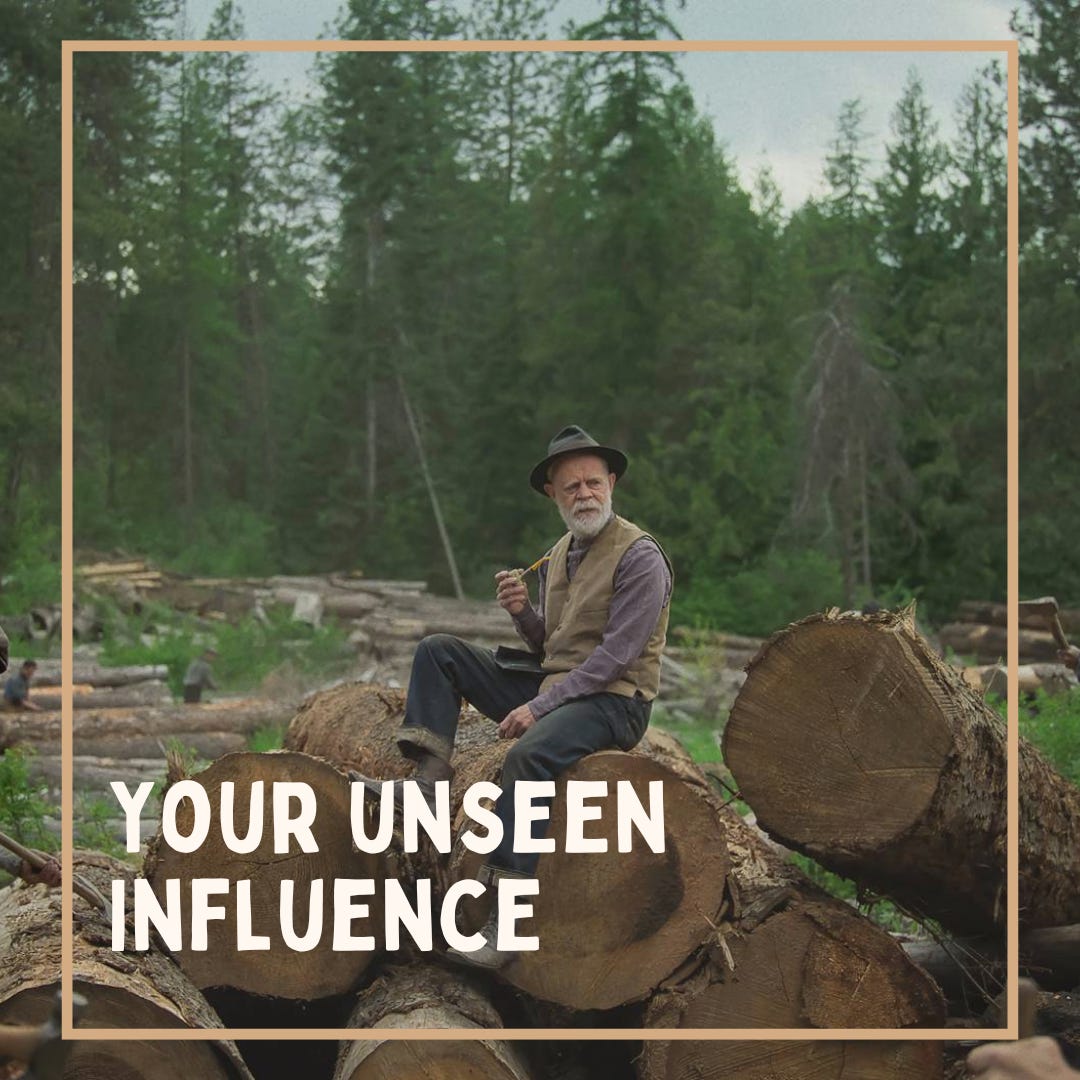
In Clint Bentley’s American period drama, Train Dreams, a taciturn logger named Robert Grainier spends long seasons away from his wife and child to labor alongside an all-male crew. Some of the fellows are solitary, some hardened, some immigrants, some deeply introspective, and some who have simply gone a bit looney. The work is dangerous, as are many of the men. Boots nailed to a tree become the only testament to those who died. Those who survive the season are lucky, luckier still if they have the physical capacity to return a year later.
Although whispers of an Oscar are in the air and despite is many accolades, I was hesitant to commit to a film about logging, colonial expansion, and the mindset that empowered both on a continental scale. Sitting down to watch, I prepared for the sickening sense of upset that accompanies just about any reminder of our nation’s ugly history over the past three- or four-hundred years. What emerged instead was pleasantly unexpected.
Against this sullen backdrop of clearcuts and catastrophe, the film manages to capture beauty, both in the rapidly changing landscape and in the profound emotions of its characters. Its limited dialogue is a study in nuance, conveying complexity through precision as much as poetry. Through Robert Grainier’s committed, loving relationship with his wife, Gladys, we witness an imperfect man’s softness and care. Even more unanticipated, however, was the environmental messaging.

The old-timer on the team, Arn Peeples (played by William H. Macy), is rough, uncouth, and superstitious, but after decades working the saw and the dynamite, his perspective profoundly changed. “It’s rough work, gentlemen,” he says to the younger chaps around the campfire, “not just on the body but on the soul. We just cut down trees that have been here for 500 years. It upsets a man’s soul whether you recognize it or not … This world is intricately stitched together, boys. Every thread we pull, we know not how it affects the design of things.”
As we collectively reflect on past actions that led us to the brink of global environmental catastrophe, it may be less surprising than it once was to find hints like this in more mainstream media. As an author and environmentalist whose core mission is to encourage respect and appreciation for our non-human kin, I celebrate and applaud it when and wherever it appears. So often this task can feel like shouting into an empty void. Couple that with the fact that those of us who feel a responsibility to correct the hurts we see can heap too much accountability on ourselves. The result is that when our little light fails to penetrate every distant corner shrouded in darkness, it’s easy to feel like the candle we carry is meaningless.
It is a strange yet profound truth that we can never know the full impact of our actions. The teacher may inspire a single student who, in later years, may pass along that wisdom to a friend who happens to be an artist, who in turn channels those same ideas to three, eight, or a hundred others. Sometimes the lesson we pass to someone else is simply the first awakening notes in a long string of music, the full extent of which may only be known years from now. Sometimes it takes hearing a message repeated a dozen times, each in a new way or from a new voice, before we understand the meaning of that wisdom; but each person in that lineup of voices has a role to play in changing the course of one individual’s future. After all, it can take hearing a song a dozen times before we can sing along. The writer who sends a book out into the world will never know who reads it this year or a hundred years from now, internalizing its lessons. The parent who teaches compassion to the child has altered more than one person’s life forever.
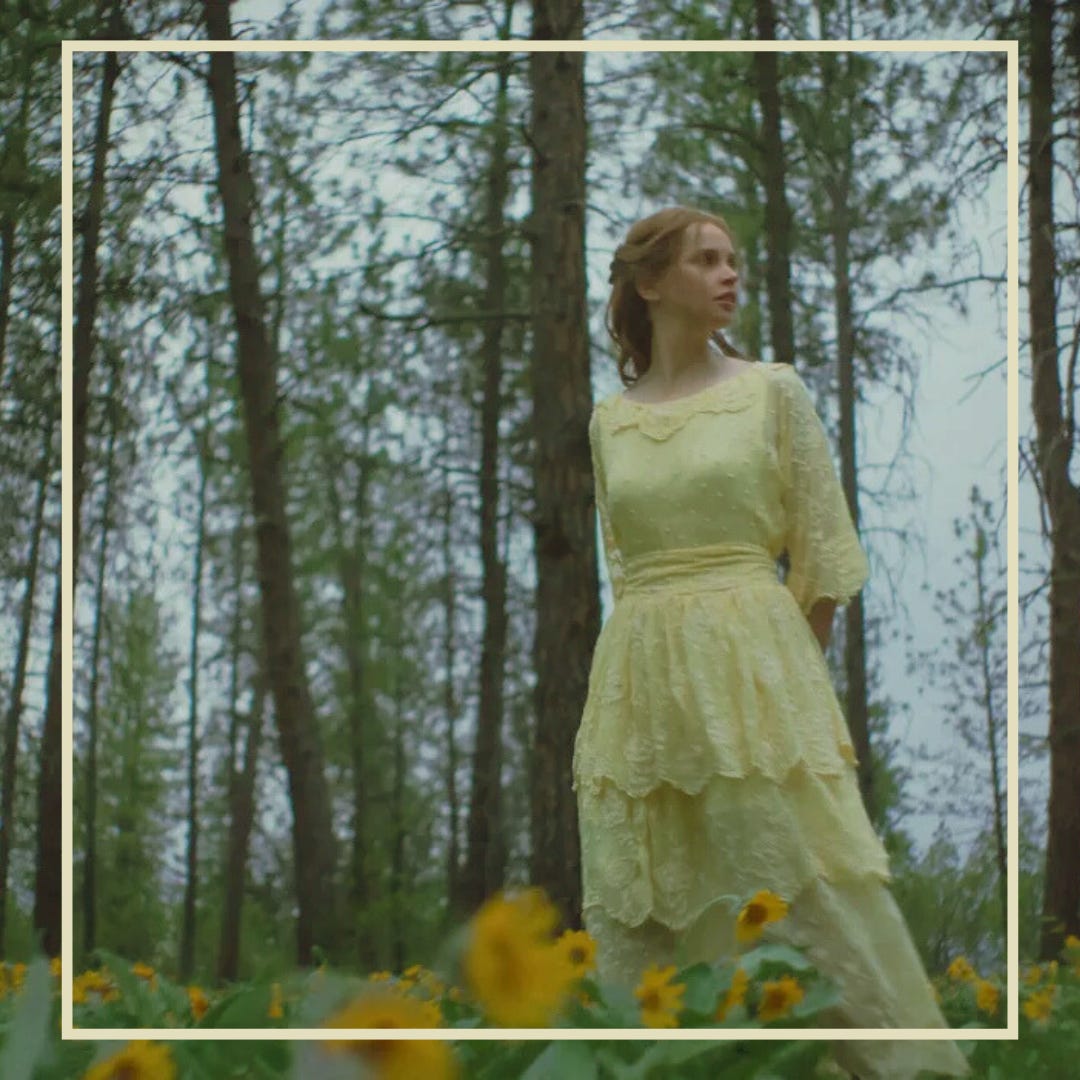
Stories about time travel often explore the consequences of altering the past, even minimally, asking the question: how would a small change in history ripple throughout time and affect the present? Applying that same logic to the present, however, we begin to consider how the small, unseen actions of a single person alive today might alter the future. Importantly, these actions need not shake the earth or span the globe. A small gesture that influences one other person can be enough.
I’ve written before about the unseen care of others and how people operating out of sight are taking care of us: “Whether it’s the architect who designed your apartment building, the cleaner sanitizing the public restrooms, the city workers picking up rubbish, or the staff maintaining the parks and infrastructure we take for granted, there are many hands at work that we rarely see.” Our own acts of courage and kindness are equally powerful, even when they go unnoticed or unpraised.
Challenging the idea that each of us must be a Greta Thunberg or Rachael Carson or Jane Goodall is and will continue to be essential for furthering environmental and social justice. The Movement needs leaders to shine like beacons in the night, yes, but equally essential are the individuals who carry candles, who educate their neighbors and children, who volunteer in their communities, and who choose to change their own behavior and thereby model change for others.
On the surface and in the film trailer, Train Dreams is presented as a historical drama ribboned with themes of romance and conquest, disconnected from contemporary environmental dialogue. But this is far from the truth, and bears little resemblance to its actual message. According to Michael Fox, “The point of the piece is that even the life of an anonymous, forgotten human being with no special talent or world-changing accomplishment … is festooned with miracles and grandeur and depth.” It’s one thing for artists, writers, or directors to engage in the conversation, peppering their work—liberally or otherwise—in cultural critique. What’s even more impactful, if only on a cumulative scale, is when people from all disciplines and walks of life begin to share that light by which others might begin to see. Our job is to bear our own candle through uncertainty, accepting that we may never know who or what might change by our light.

Oh my gosh. This is one I will print out and keep on my bedside, table to reread often and slowly, taking it all in, and letting it fill those empty places in my soul. I love it so much. It’s absolutely wonderful.
Thank you for this moving, poigant, and illimitable message.
I love what you wrote here Emily. And I loved Train Dreams. You certainly expressed more important info than the movie reviews.
And on another note, a friend of mine is a VP for Universal Pictures. He and my daughter have been friends since 1st grade! A couple of years ago he was invited to be in the Academy, so now he gets to vote on the Awards. Each year he sends me his top 10 faves of the year. We always have some disagreements as to our likes, etc. But this year just got his list and Train Dreams was No. 1. I was surprised!