Overcoming Eco-Grief
There is risk, but there are also real, meaningful reasons for hope.

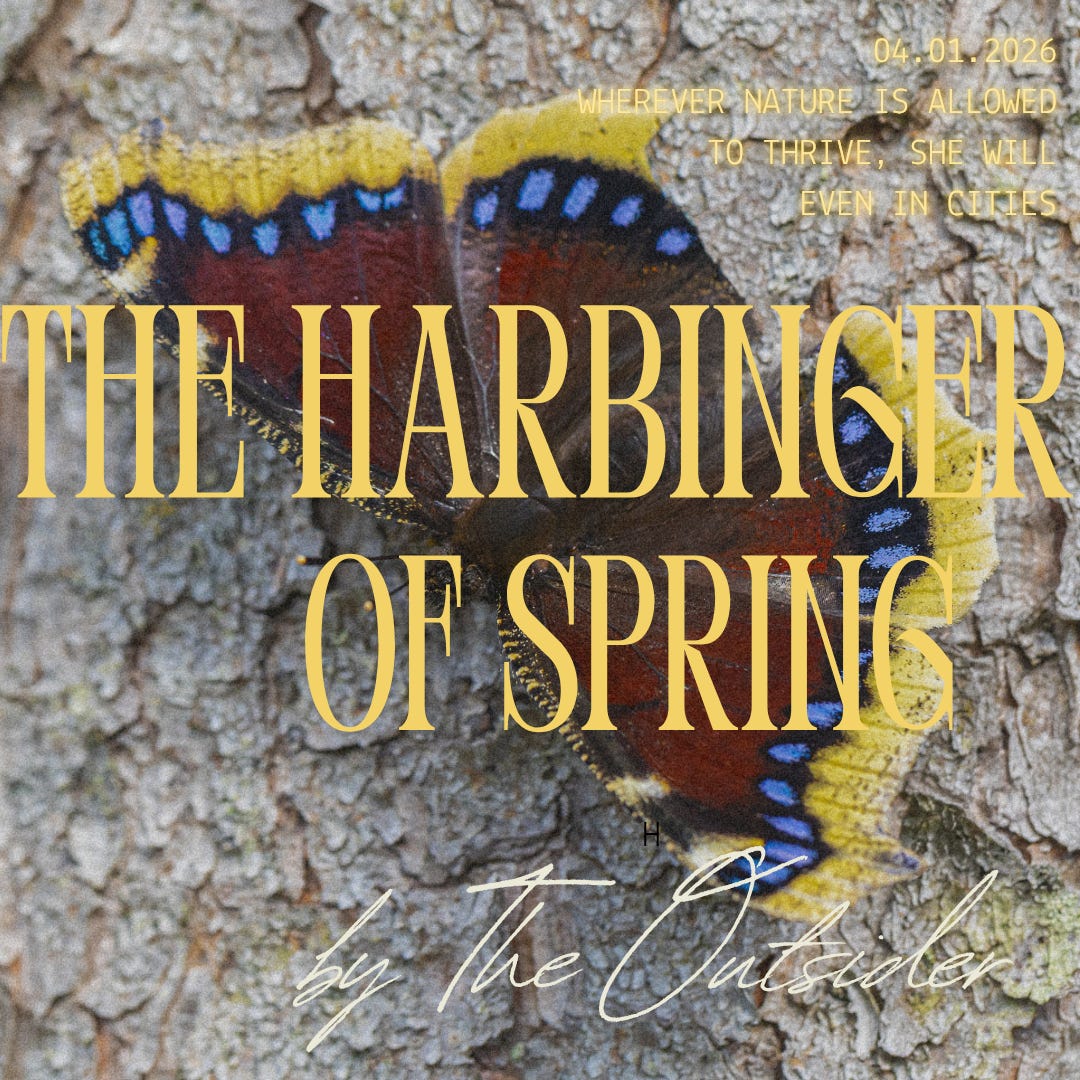
The morning was awash in birdsong. Hundreds of robins gathered on greening lawns to peck at emerging insects. Sparrows, juncos, Hermit thrushes, and tiny brown Winter wrens scurried and flitted amongst the carpet of decaying leaves. Phoebes bobbed on branches. The first sapsuckers to arrive squalled nasally from the treetops. Only last week, I spotted my first Mourning Cloak butterfly of the season. Today, the bluish-green rounds of Virginia bluebell leaves were poking from the soil. Suburban lawns are bedecked in indigo-blue Siberian squill, crocuses, and violets. These are tangible signs of spring’s long-awaited return.
But something about a lightless, rain-drenched afternoon provides the ideal germination conditions for dark thoughts and worried musings.
Many of us are experiencing something similar right now, an undefined wariness, a sense that something is not right. Culture wars. Literal wars. Climate catastrophe. The collapse of long-held expectations toward what often feels like a hostile, unfamiliar future. Most of us struggle to find a silver lining amid this shifting, unpredictable landscape. Concern is not irrational; it is a response to real risks. But fear and apprehension not only cripple action, these feelings shape how we view our everyday existence.
When minds are shrouded by fear, they are more likely to succumb to the warped image that resembles media headlines, not reality. By homing in on the worst possibilities, we fail to consider the progress already being made and the fact that there is real reason for hope.

There is no sugarcoating reality. Yes, climate change and biodiversity loss are already affecting the life-support of entire ecosystems. Global warming is increasingly altering how and where people live, too. Although ambitious global targets have been set, current policies are insufficient to meet them. In our haste to exploit earth’s “natural resources” humans have caused immense harm and suffering: we have severed our rightful connection with the rest of creation, have decimated entire cultures, and diminished the abundance of life on this miraculous planet.
Acknowledging where we are right now can be unsettling, but it is essential to take stock and reckon with the harm so that we can counteract these trends and try to do better. It also means we need to recognize and applaud what progress has already been made.
Importantly, there are millions people alive today that care about environmental protection, habitat restoration, and climate resilience. More people than ever before understand and accept that human activity is causing climate change and biodiversity loss. That means that more eyes are fixed on the problem, finding solutions, and taking action than in any of the preceding decades. Thanks to this heightened attention, there has been significant acceleration in creating a livable future, especially within the last 10–15 years:
Nature protection is gaining traction: Global, legally binding agreements now aim to protect 30% of land and oceans by 2030. Colloquially known as 30x30, this is the biggest conservation commitment the world has ever seen.
Clean energy is scaling fast: Solar and wind are now the cheapest sources of new electricity in many places. Adoption has been exponential, not linear.
Policies are strengthening: Even when it is imperfect, many countries are tightening emissions targets, investing in clean energy like wind and solar, and reducing pollution.
Technology is improving quickly: Batteries, electric vehicles, grid storage, and infrastructure needed to support the clean energy transition are now available, and alternative proteins are becoming commonplace.
Public pressure is mounting: Over the past 10 years, public pressure from grassroots activism to youth movements calling for environmental justice has intensified, transforming it from a niche issue into a central component of environmental policy, securing major government investments, such as the Green Climate Fund and the Amazon Fund, and influencing corporate accountability and fossil fuel divestment.
Importantly, earlier worst-case warming scenarios (like 4–5°C) are now considered much less likely given current trajectories, as human collective action is already bending the curve.
A binary view of potential outcomes is equally unhelpful. The question isn’t “Can we fix everything before it’s too late?” but “How much can we still protect?”
The answer is: a lot.
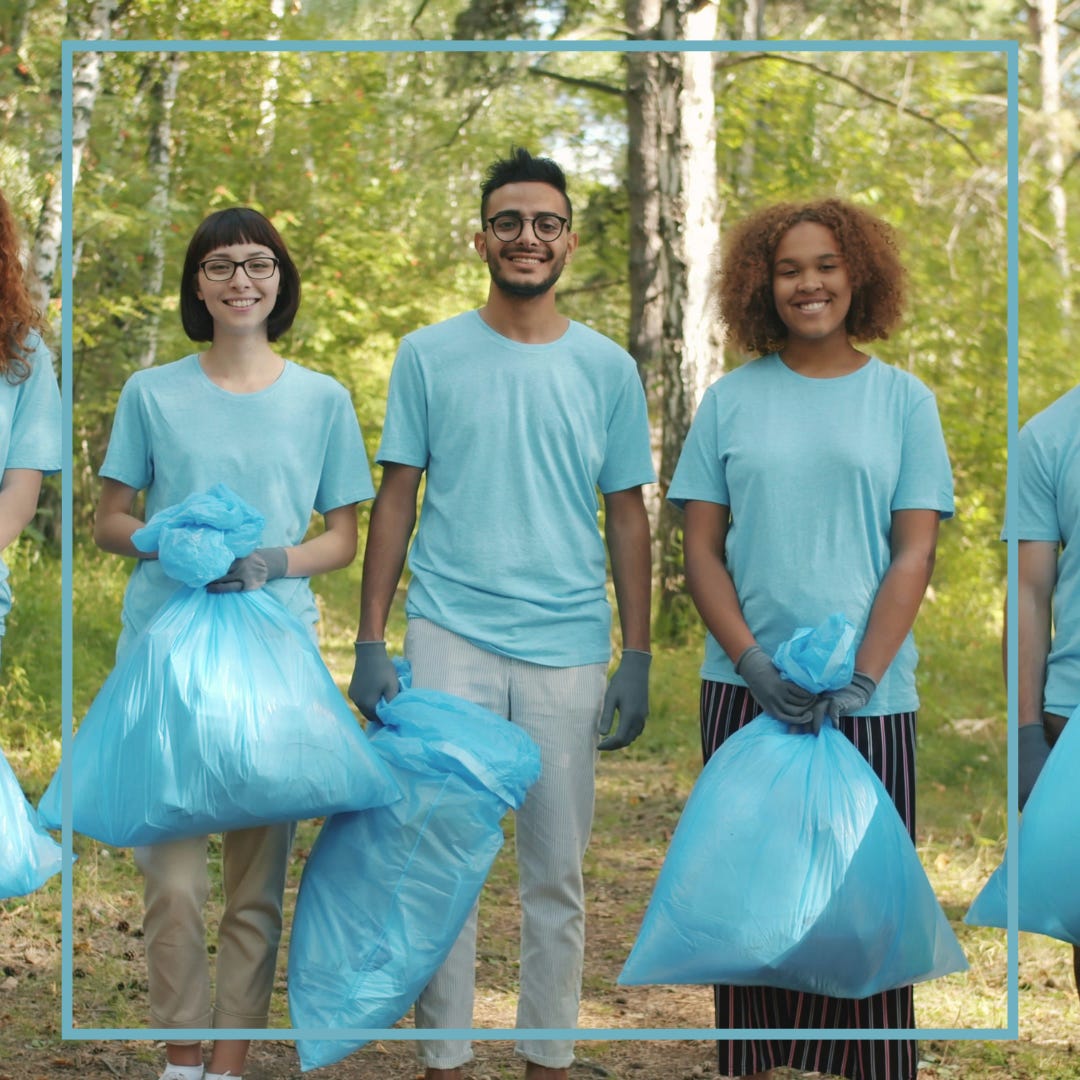
Every fraction of a degree of planetary warming prevented means fewer extinctions and less severe climate events. Every parcel of habitat protected gives more species a chance to survive. Every policy change builds momentum toward a more resilient, equitable future. Every person newly introduced to the climate movement becomes another voice demanding change, amplifying the call that is already ricocheting around the globe.
Change builds upon itself.
Although global energy systems and political decisions often move at a glacially slow pace, external factors have the potential to cause rapid ripple effects. When new technologies, like solar power, hit tipping points that make them more cost effective than the status quo, or when public opinion reaches a crescendo, this is when policies that once seemed impossible suddenly take hold, spread, and become broadly adopted. We’ve seen this happen regularly in this country, with progressive states acting as incubators for progressive, groundbreaking policies that are eventually adopted regionally or nationally years later, in a process known as the “California Effect.”
These chain reactions tend to be exponential with each shift building upon the predecessors, with advantageous spillovers to other contexts and industries.
When we look back, we see a clear pattern:
2000s: awareness
2010s: early adoption
2020s: scaling
Meaning, the next decade will likely bring accelerated change and system-wide transformation. This does not mean our environmental problems will finally be solved, rather we will have reached a threshold where progress toward a more environmentally just and robust future becomes widely visible.

In addition to accelerated clean energy adoption and widespread climate action that is not reliant on government action (which can backtrack), there are other extremely hopeful trends. Indigenous-led conservation has gained significant support and increased attention. Major global programs now explicitly link climate goals, such as achieving net-zero emissions, with ecosystem restoration. Large-scale restoration of forests, wetlands, grasslands, reefs, mangroves, and prairies is already being undertaken through coordinated action between states, governments, academic institutions, and NGOs. Expansion of protected areas, especially oceans, to reach the 30x30 goal is globally recognized as a crucial step in curbing biodiversity loss and helping wildlife populations recover.
There is still time to meaningfully reduce the harm humans have caused to ourselves and wildlife. The window hasn’t closed.
Yet despite hopeful trends, it is easy to become overwhelmed. How can we stay psychologically grounded without ignoring the very real problems we collectively face?
Here are a few of my tips and tricks:
Stay informed, within limits. Remember that news media largely exists to sell itself, and much of it relies on attention-grabbing, negatively biased content to hold people’s focus by provoking an emotional reaction. Constant exposure to bad news can amplify despair without adding agency. Rather than consuming a broad swathe, I focus on the one overarching problem I care about, environmental justice, and subscribe to a curated a list of sources that publish well-researched, timely journalism that include specific calls to action. I set timers on my apps to prevent checking email newsletters before noon and to deter mindless scrolling.
Focus on tangible impact. Participating in and advocating for local conservation projects, voting in elections or writing to elected officials, even engaging in environmental action at work gives you agency and reduces eco-grief. While my day job is not directly linked to the environmental movement, I became a writer (in my free time) with the goal of promoting environmentalism. I volunteer weekly at a reclaimed restoration site turned native prairie, write eco-focused opinion pieces for my city newspaper, and publish essays here on The Outsider every week, working to share my field notes, wildlife observations, and thoughtful ways people can learn to connect with nature wherever they live.
Stay connected to nature itself. Spending time outside reminds us of what we’re protecting, not just what’s at risk. Dedicating time and effort to learning about the different habitats where we live makes them real to us in a way that passive admiration cannot. As I wrote in a previous essay, “Ongoing education and exposure to wildlife from an early age; attention paid to seasonal shifts and changes, emergences and retreats; spending more time outdoors, using your senses to attune yourself to the world; these are powerful tools to foster connection with the land.” Time spent with nature is as essential for the body and spirit as clean water, sleep, and loving connections. It’s what sustains us.
Find others who care. The saying goes: Shared grief is half the sorrow, but happiness when shared, is doubled. When we gather with like-minded people, those who care about the natural world, social justice, land restoration and the like, our concern turns to shared energy instead of worried isolation. In company, we also discover how much more effective collective action is versus individual efforts alone. We inevitably learn more about the places we want to protect from those who have been at it longer than we have. Together, we have the resilience to overcome obstacles and the diversity of minds to troubleshoot problems as they arise. All the friends I’m closest with here in Milwaukee are people I’ve met through volunteering with organizations that prioritize land stewardship. Thanks to these folks, I’ve broadened my knowledge of local ecosystems, native habitats, plants, mammals, insects and fungi. That familiarity serves as the foundation for ecological care.
The surest way to overcome eco-grief is to broaden our field of view beyond the media headlines. In Blessed Unrest, author Paul Hawken argues persuasively that roughly 1 in 5 people are part of the environmental movement, working to advance peace, equality, education, women and minority rights, and environmental and social justice wherever it is absent or under threat. The Movement, he calls it, exists on every continent and in virtually every community on earth.
The hopeful news is this: the future is still being decided, and human actions are already improving the outcome. Dr. Jane Goodall believed that hope is not something passive. It is a force we create through our choices, our compassion, and our courage. Whenever we feel it slipping, we can look to past successes for inspiration and guidance, and to the leaders championing social equity, an emissions-free future, and environmental restoration. We can counteract eco-grief every day in the choices we make—from what we eat, to which plants we grow in our yards, to where we spend our money, to what we teach our children to value.
I want to live in a world where more people feel hopeful for the future, and connected to and responsible for the lands they call home, wherever that may be. I will do what I can today to help create that future, to share the message of hope through action, and to walk the path toward greater connectivity and appreciation for the natural world, scattering seeds as I go.
See you in the comments section!
Cheers,
Emily The Outsider
Interested in rediscovering lost species? Then check out my forthcoming novel, Cupido Cupido, about a teenage boy who spends a summer living on his immigrant grandfather’s farm in rural Kentucky, where he makes an unexpected scientific discovery.
Blending dry humor with emotional depth, Cupido Cupido navigates family estrangement, cultural inheritance, and the complex act of growing up.
Winner of the Sowell Emerging Writers Prize
PEN/Bellwether Prize finalist

Want to try before you buy? Read the first chapter for FREE when you sign up for my newsletter on my website.

Thank you Emily for all you do for the environment. You are very inspiring and reading here this morning was just what I needed. What you have written here at least gives me hope for the future.
Just posted this to all my friends on facebook.