

This Body, This Land
How life-threatening illness awakened me to life's mystery and abundance.

Once, I was given a strange seed. Not unusual in its appearance, but in the conditions required for it to germinate, for this special seed can grow only in the wretched soils of illness.
For nearly a decade in my youth, I endured the self-inflicted punishment of multiple eating disorders. More than one expert tried convincing me that the source of that trouble was rooted in unrecalled childhood trauma, but it wasn’t. It was a symptom of unraveling connection. I was one of the happy, safe, well-loved children who befriended animals with ease, but failed to do so with peers. At that time, I did not yet know myself well enough to understand that I am someone who does not make meaningful connections with others on rapid timescales. What I learned instead, upon entering social circles like school, was that people who looked a certain way were given preferential treatment. Over time, I began to manipulate my appearance using restrictive eating and exercise, which favored me with the gratification of superficial admiration. It was a problematic, addictive feedback loop rooted in loneliness, one that could have ended my life; eating disorders are the most lethal of all psychiatric illnesses.
It was one of those proverbial rock bottom cases. I have never been so sick in body or in spirit. I could not physically or mentally continue, starving myself not only of nourishment but also of meaningful connection. But it was in that bare-boned soil that the seed was planted and began to sprout.
Like a tree, whose growth is almost imperceptibly slow, the foundational work of healing would take many years. Aside from the unconditional support of my parents and the partner I met during that transitional time, I had few trustworthy guides. But my background in medical research gave me the tools—discernment, key among them—to be able to teach myself many things, including how to eat.
Eating, in all its myriad forms, is fundamental to all life on this planet, so for those who don’t struggle with it, it might be strange to think that someone doesn’t know how to eat. I sought medical help, but even the physicians I spoke with proselytized food-restricted diets for healing, reflecting the warped tenets of Western diet culture. Endorsing a flawed method only amplifies the problem. Knowing that mire could not contain my salvation, I turned aside, looking to our ancestors, to people untouched by competing fads and ad campaigns, for guidance. What did those who came before us eat?
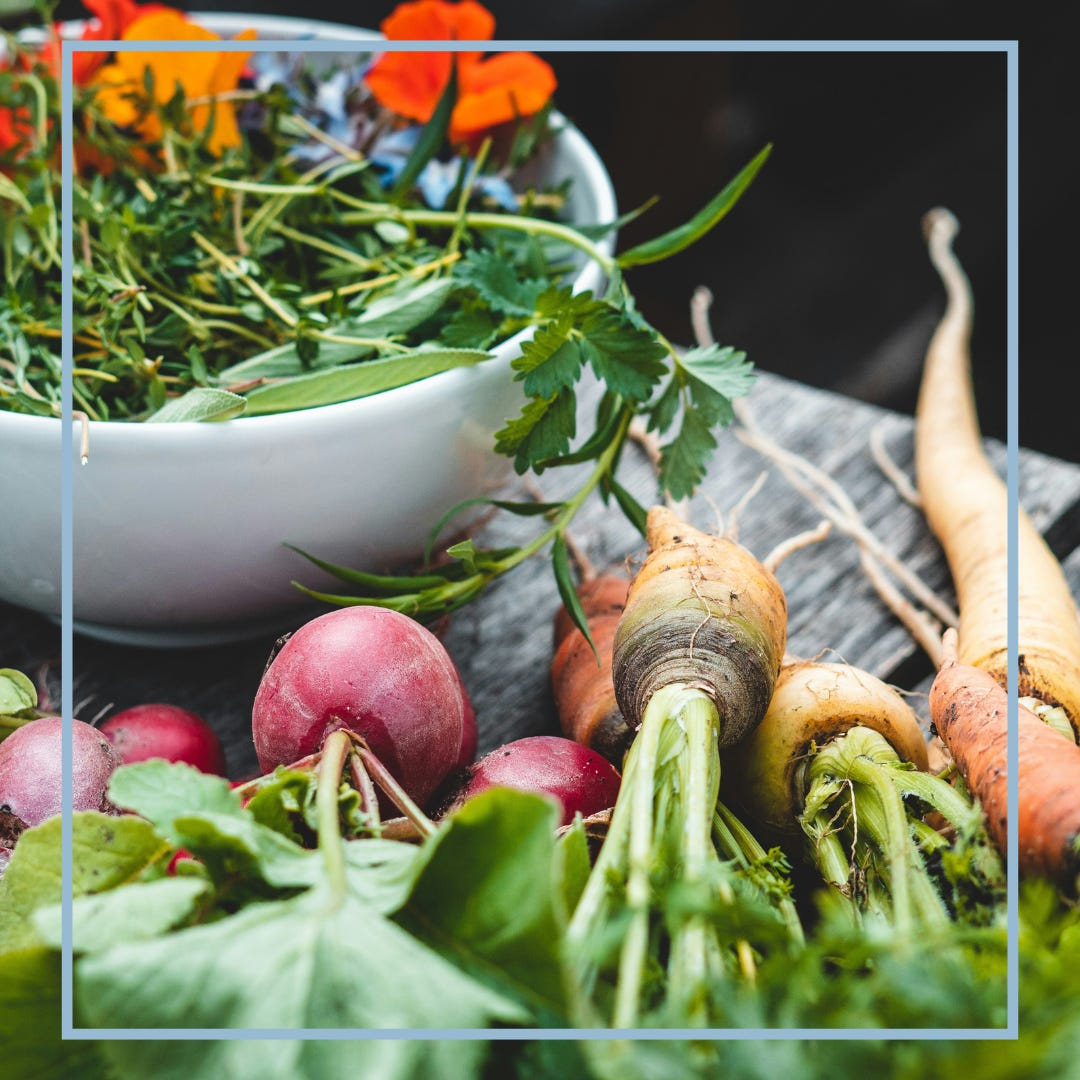
In every season, Mother Earth grows a garden from which the people found many plants and animals to sustain them. Over countless generations, they developed rituals surrounding seasonal harvests and learned to process these foods to maximize their digestibility and taste. Health resulted from developing intimate knowledge of all parts of many types of plants—buds, leaves, roots, flowers, fruits, and stems—where to find them, and in what season. Women carried this knowledge. Theirs was the wisdom of hundreds of generations of mothers and grandmothers who had known how to nourish themselves and their families, not because they had access to grocers and nutritional experts, but because they didn’t. Theirs was a wisdom intimately braided with the landscape, seasonality, and ceremony.
From that seed rooted in illness, a stable trunk had grown, showing me how to eat and live in concert with Mother Earth’s seasonal shifts, and to trust in my body’s innate, evolutionarily tested wisdom to know its own needs. But the seed was not done growing.
Food may be the supreme invitation to explore cultural identity. I live on the southwestern shores of Michigami, Lake Michigan, on traditional Potawatomi, Ho-Chunk, and Menominee homelands. From their histories and modern lessons, I learned about wild rice, the return of the buffalo, the perfect union of the Three Sisters—corn, beans, and squash—and, importantly, why so many of these and other food traditions were almost lost. I discovered indigenous writers and activists working to restore culture and language to lands and people desperate for wholeness. The lessons gifted to me by the ancestors of the Great Lakes region were the branches of the tree, born of the seed rooted in illness.
Edible plants and the animals that rely on them are not the only ones that live here, of course. My interest in regional foods sparked a new curiosity that led me along a new path. This one revealed the differences between native and non-native species, which ones are “invasive” and how these aggressive beings affect local insect and animal communities, and the ecological travesty that is the modern lawn. My tree, born of a seed rooted in illness, began to leaf out.
My interest in native plant communities led me to volunteer at our local ecology center, where my ability to name and identify the species I share this urban space with expanded rapidly. I met others who cared about the same things I did and, for the first time in over a decade, I found kinship, not just with wildlife but with people. I made friends organically, over time, through a shared passion for the natural world. There, in that community amongst the echinacea, bee balm, wild indigo, little blue stem, and sumac, I met birders, land stewards, biologists, and activists who opened my eyes and mind to our planet’s ecological marvels. My tree began to flower.
Proust said that the voyage of discovery lies not in seeking new vistas but in having new eyes. Illness revealed to me a new continent, and like all explorers I was eager to share my extraordinary findings with the people of my culture. I published my debut novel, about a young woman suffering from eating disorders who reconnects with the land on a small family farm in rural Japan, a country which boasts one of the most intact and diverse food cultures on earth and whose people demonstrate a level of knowledge and reverence for individual ingredients unlike any I’ve encountered outside indigenous groups. My second novel followed a few years later, written at the intersection of science, conservation, and wonder. Through words like these, I hope to plant new seeds in other minds.
Through forgetfulness or design, much wisdom has been lost. Yet even in this impoverished age, in which we place value on objects and acquisitions over our neighbors, the rivers and otters and mollusks and prairies upon whom our wellbeing depends, I have learned many things and have grown in compassion toward myself and all beings.
The people of our culture are beset by the dangerous maladies of species loneliness and plant blindness. We have even forgotten how to listen to our own bodies. It is often said that the social justice movement and the climate justice movement are two sides of the same coin; how we treat each other is how we treat the natural world. How we view and treat our own bodies may be another side of this coin. The punishments we inflict on ourselves—body dysmorphia, eating disorders, substance abuse, self-harm, and more—seem to me to be symptoms of an extortionate relationship, between and among humans and with the rest of creation. Perhaps extending compassion and care to our bodies can be an accessible avenue for healing what lies beyond ourselves.
Sometimes it takes a crisis to awaken us to what matters most. As Aboriginal scholar Tyson Yunkaporta put it, “If ignored for long periods, [your gut] will seek ways to sabotage your murderous path of narcissism and bring you back into proper relation with the beings and lands that sustain you.” Humanity is most certainly in crisis. For too long we have ignored the evolutionary wisdom inherent to all beings and biomes; the only way to save ourselves is to abandon the sinking vessel that is our consumptive, human-centric way of living, and swim like mad toward new shores. Thankfully, we are blessed with good guides: our ancestors, the community of life, our own bodies.
In the words of Rachel Naomi Remen, M.D., “When people’s lives are challenged by significant illness and they instinctively begin to gather their strength, their values are often among the first things that change.” So it was for me. Illness destabilized my worldview and cleared my vision, orienting me to what matters most. I’m reminded of the final line of the Sabbath prayer that reads, “How filled with awe is this place and we did not know it.” I, like many, was sightless among miracles. It was only thanks to life-threatening illness that I was awakened to life’s mystery and abundance. Within each of us lies the same possibility for transformation.
Here are two things I now know beyond doubt:
Human health is connected to land health. How we treat our food is how we treat ourselves. When we value what nourishes us, we learn to extend care to the land and all the beings it sustains.
We cannot save the earth through technology or innovation; we must change our relationship to the land and our nonhuman kin. It is time for people to shed the illness of individualistic sovereignty and embrace the authenticity of interrelationship. Perhaps that rethinking can begin at the dinner table. Upon your dish, I place a seed.
See you in the comments section!
Cheers,
Emily The Outsider
I write books about people’s connection to the land where they live and learning to connect with nature, often for the first time.
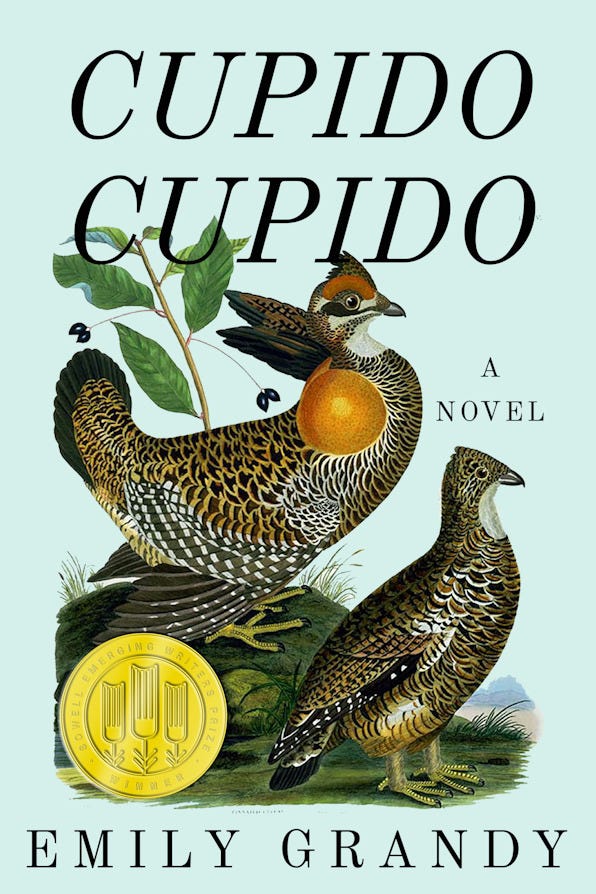
“Cupido Cupido is quietly affecting, the kind of novel that slowly builds emotional weight until you’re completely pulled in. What appears at first to be a familiar coming-of-age setup unfolds into something far more resonant: a meditation on cultural inheritance, ecological intrigue, and the painful intimacy of family silence.” —Goodreads review
Thank you Emily for bravely sharing your personal story and experiences of self discovery and healing.
Both of your award winning books are excellent. What a great story teller you are. My friends who have read Michakusa House and are now reading Cupido Cupido always comment on how well you write as well as how beautifully descriptive your writing is.
I’m so glad both books are available in our local library. They are usually checked out when I look for them on the shelf.
I just sent this out to all my friends on facebook.