

Shifting Baseline Syndrome
How to reverse the normalization of creeping environmental degradation.

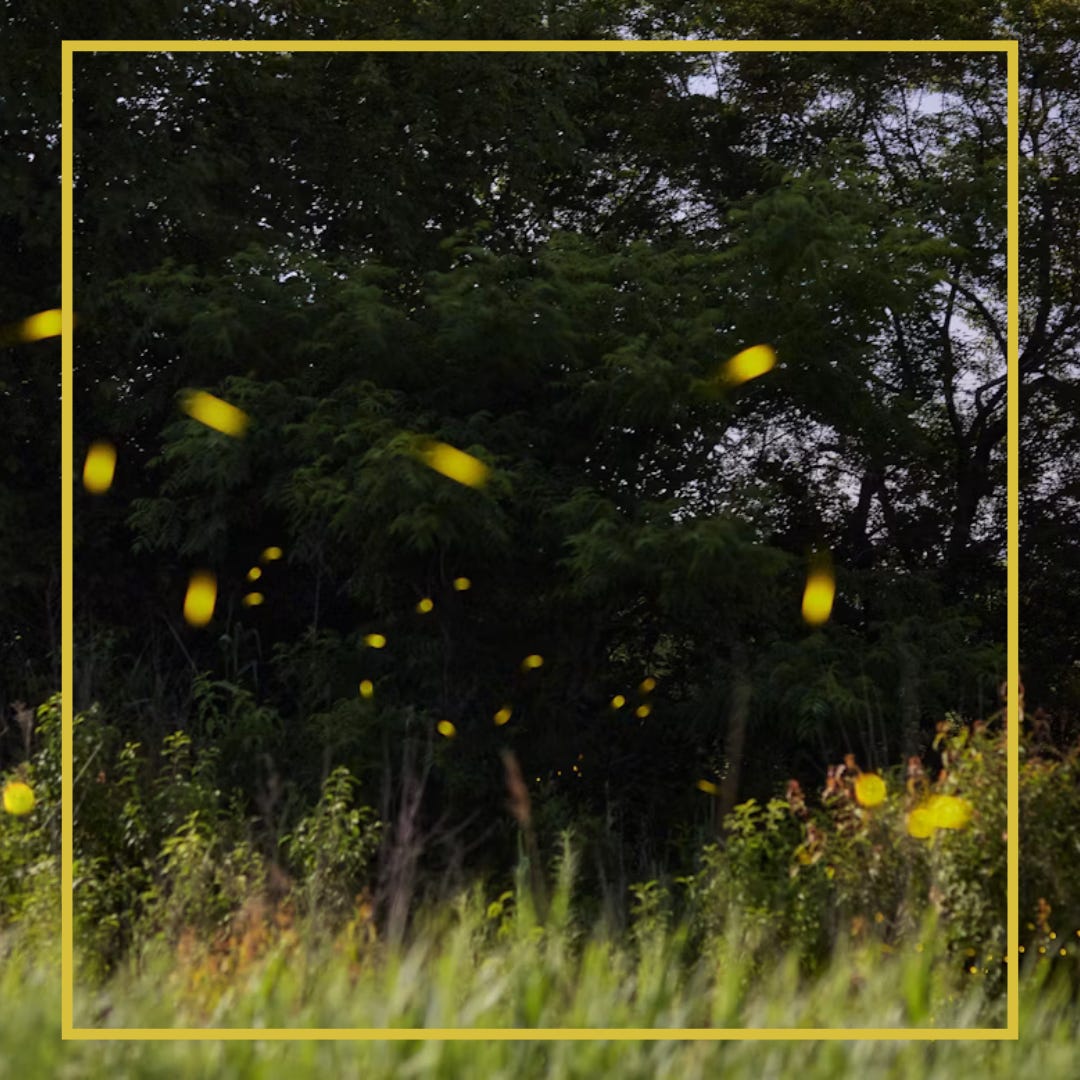
As the heat of the midsummer sun fades and dusk gently settles, I set out in search of fireflies. There is a park a few blocks from my apartment where they gather by the hundreds. Glittering and floating above the grass, they sway and glide like dancers in a ballroom. Their yellow-green lights twinkle on and off, a beautiful display that lasts a fraction of an hour. As darkness approaches, their light retreats entirely.
Most people associate fireflies with memories of a happy childhood. Most of us grew up catching these delicate insects on an outstretched finger, watching them light up before lifting their wings and floating away. Every yard had fireflies. But wander through just about any neighborhood today, and you will find very few of these uniquely beautiful insects. It’s not hard to see why.
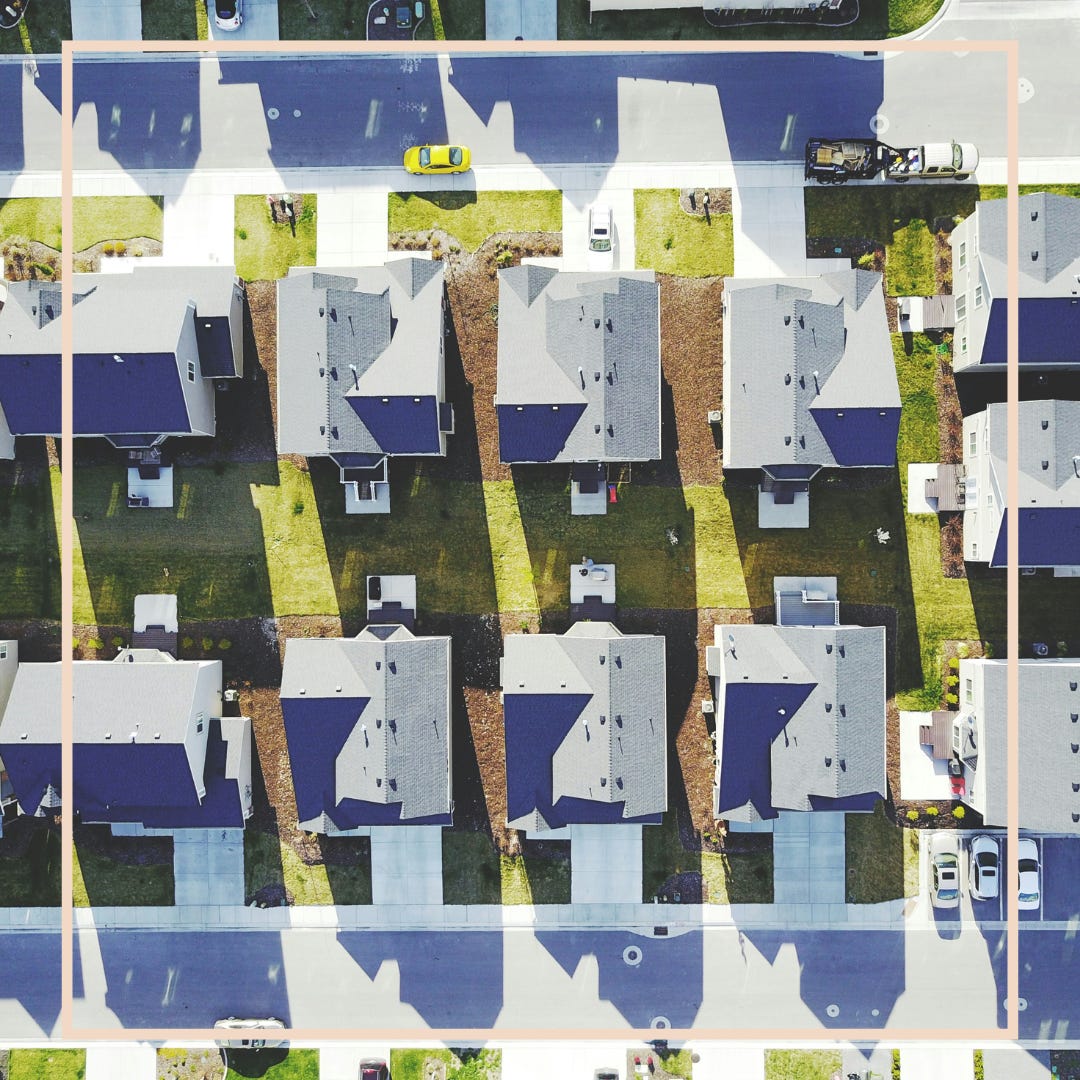
Walk down just about any suburban street America nowadays and you’ll see tidy square lawns with grass mowed to within a few inches of the ground, maybe a few daylilies along the edge of the house, and a non-native Siberian elm or Norway Maple decorating the tree lawn. Insects have been routinely eliminated with pesticides, and the leaf litter they require to protect them through the winter has been removed. “Weeds” are suppressed with herbicides and dyed mulch is applied to maintain a clean, sterile appearance. Neighborhoods are laid out in a grid, with large amounts of square footage reserved for concrete and asphalt—streets, driveways, and sidewalks. Creeks are channeled into culverts that flow along in a thin, narrow line behind strip malls. The last woodlots have a “For Sale” sign staked near the roadside.
The look is common, unvarying, and predictable.
Go back a generation or two, however, and the look of an American neighborhood would be vastly different. We had high streets with shops owned by our neighbors instead of corporate big-box stores. Drugstores and gas stations were not a fixture of every street corner. In fifty years, we abandoned community and locally owned businesses for faceless commercialism and cheaply produced goods. But this was not the only sacrifice.
In my dad’s heyday, kids played outside, exploring local streams and forests, literally from dawn until dusk. Fish swam in the streams and turtles still basked on riverbanks. The soundscape of a day was not mechanical, the constant flow of traffic and sirens, but avian. Birds could be heard singing at dawn. Cicadas took up the chorus at midday, frogs and crickets at dusk. On summer nights, fireflies lit up every yard.
Go back three or four generations before that and you probably wouldn’t even recognize the place you live now, though people would have lived there. The changes from one generation to the next have been slow and gradual so the transition seems subtle.
Because younger generations have no firsthand experience of what a landscape or community looked like before their birth, they lack any personal memory of historical baselines. Without dedicated elders and teachers who educate children about the places they live and the plants, animals, and other wildlife that make up an evolutionarily coherent ecosystem, and without knowledgeable stewards to protect intact environments from progressive degradation and development, each new generation accepts this gradually depleting landscape as “normal”. They then use this lowered benchmark to gauge the wellbeing of a community and decide policy and management strategies.
This psychosocial phenomenon that unknowingly accepts and normalizes creeping environmental degradation, and underestimates how ecologically different the past was, is known as shifting baseline syndrome.
Shifting baseline syndrome results from a dangerous disconnect from the landscapes we inhabit, producing a community that is deeply unwell yet cannot recognize the symptoms or source of their illness. Lack of exposure to increasingly rare unbroken ecosystems further alienates us from the living world, perpetuating the cycle. It becomes increasingly acceptable for people to grow up with no knowledge of plants, animals, insects, or where they belong and why. This cycle of lowered expectations and compounding ignorance manifests in sterile backyards, corporate retail wastelands, and superfund sites.
When people have no idea how the pieces of an ecosystem exist, let along how they function or fit together, trouble ensues. Let’s return to the average suburban yard.
The obligation to plant everything in uniform, undifferentiated rows makes sense in an agricultural context reliant on machinery but represents a maniacal compulsion in virtually any other setting. It’s as if the habit were born of minds that had never actually spent time outdoors. In fact, they hadn’t. Uniform, symmetrical gardens were popularized by French aristocrats in the 1700s, using geometrical symmetry to represent absolute control and power.
Today, we’ve taken standardization and control to an entirely new, deeply troubling level. We have normalized homogeneity to the point that other species cannot exist and literally go extinct due equally to our whimsical desire for ecologically purposeless ornamentation and deliberately self-centered practices.
Today, nearly all the world’s animal biomass is made up of humans, livestock, and pets; wild animals make up only 5% of all life on earth. The overwhelming majority of global agricultural land—roughly 77%—is used to grow feed crops for livestock rather than humans directly. If you know anything about the food chain, then you understand why this is a profoundly stupid way to feed people. Mathematically, this inefficiency is governed by the 10% rule of ecological energy transfer. Meaning, when energy is transferred one level up the food chain, only 10% is passed on. For every step up a food chain, about 90% of the energy is lost as metabolic heat and waste. This explains why ecosystems can support vast numbers of primary producers, like insects and plants, but only a few apex predators. When humans eat crops directly, this represents a one-step chain; when we eat meat, it is a two-step chain, resulting in massive metabolic losses. Compounded on a global scale and you begin to realize why switching to a plant-heavy diet is not about taking a political stance, it is crucial to sustaining life on this planet.
The rigidity and conformity of the world’s currently dominant culture—ours—represents a hell of our own making. Disconnection with the land is emotionally, mentally, physically, and spiritually devastating. Cultures that pass on knowledge of local wildlife, terrain, geography, and climate from one generation to the next, placing people within the context of a healthy, functioning, supportive ecosystem, do not deplete their environment beyond habitability or recognition, as our culture has done. Those who recognize and closely experience the environmental devastation we’ve wrought on the earth, including Indigenous people, frontline communities, youth, scientists, and educated others, often suffer extreme mental health challenges, including severe and chronic stress, helplessness, and depression. This is not a clinical disorder; psychologists warn that this is a rational response to a very real crisis.
Human health is inextricably linked to the wellbeing of the earth. We cannot treat our home with neglect, allow our green to run rampant, and proceed with almost willful ignorance of biological systems and expect things to be well. Our recklessness, thoughtlessness, and persistent lack of caregiving is reminiscent of the self-centered, immature teenager. It’s time to grow up.
The fiction that humans are separate from and superior to the living world has been perpetuated by leaders and world religions throughout history in order to make a few elite individuals enormously wealthy and powerful. An ecological education topples that narrative; cultures that decentralize a biologically based worldview suddenly appear childish, clueless, and on a swift path to disaster. Unfortunately, the ecologically educated are in the minority.
Humans are behaviorally conformist, so until now the rampant culture of anthropocentrism has put human impulses at the center of everything. The good news is, humans are conformist, so if we shift the prevailing culture, human actions will follow the trend. The other good news is we already have the ability, skill, and knowledge to do so.
What does a transition away from selfishness look like? For people like you and me, the most important thing we can do is kill the artificial golf course decorating our front yards.
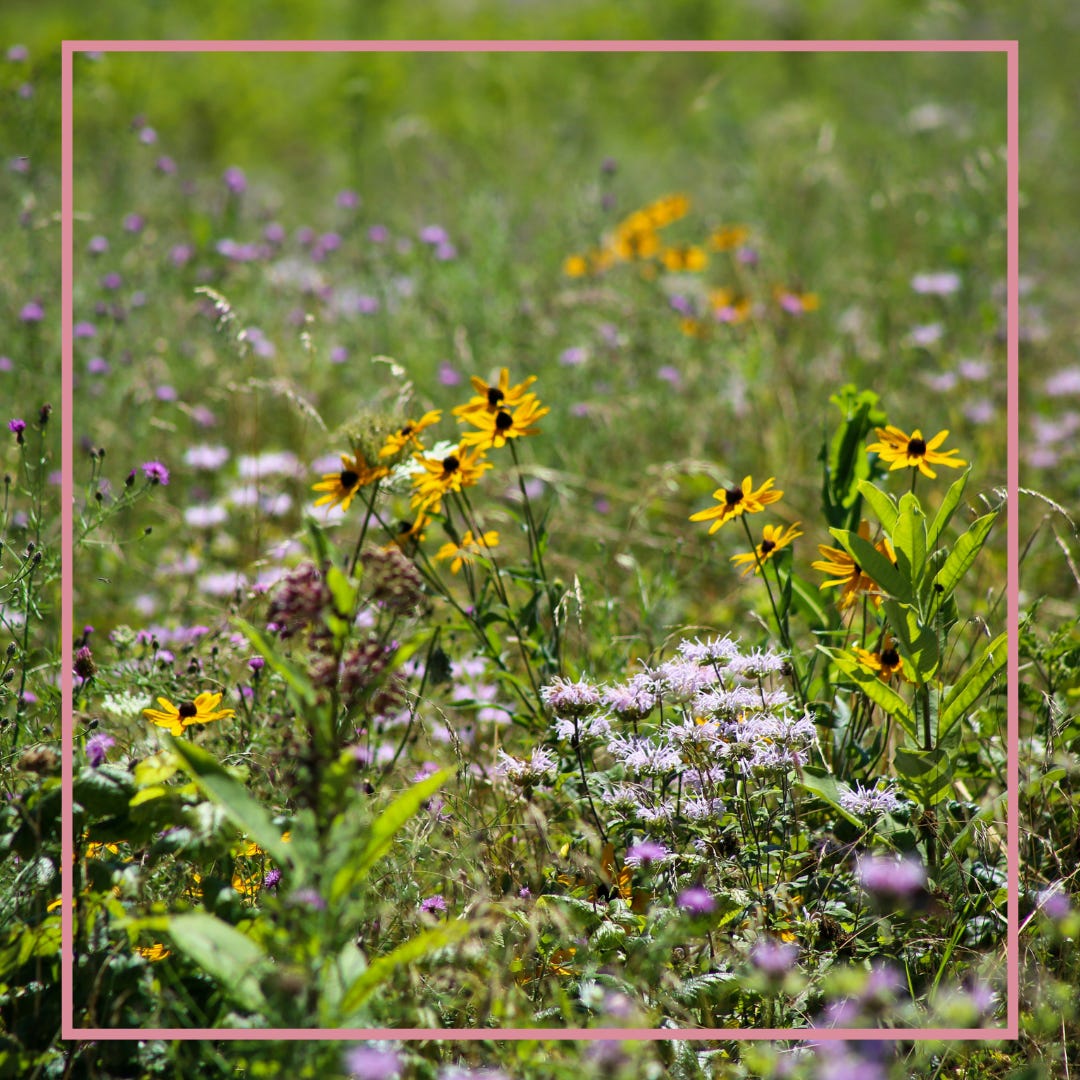
The lawn is an ecological dead zone, providing little food or shelter for wildlife, requiring intensive inputs such as fertilizers, herbicides, and fungicides to maintain them as a monoculture. Lawns contribute to water and soil pollution and exacerbate the heat island effect because we cut them so artificially short that the sun bakes the earth beneath the leaves. On top of all that, lawns are extremely water intensive, consuming a staggering 9 billion gallons of water per day in the United States. Replacing lawns with a biodiverse garden of native plants—those that coevolved over tens or hundreds of thousands of years and are adapted to the local environmental conditions, forming life-sustaining relationships with the local insects, fungi, bacteria, birds and other wildlife—helps add to local ecosystems desperately in need of support. Native plants are also easier to grow and require few, if any, inputs because they are genetically adapted to the local climate and soil conditions.
Plants grounded in the local ecology of a place weave our gardens into the unique regional fabric. They connect us to where we live. Instead of depleting our landscapes, leaving them worse off for the next generation, why not give back, leaving this place better than we found it?
“There are plenty of cultures that give us examples of healthy land ethics that we can aspire to. We are not condemned to behave how we have been behaving. There’s simply been a void of leadership and a corruption of values... We are not bound to repeat the same mistakes, stuck on a hamster wheel of bad habits.”
—Joey Santore, Concrete Botany: The Ecology of Plants in the Age of Human Disturbance
Native plants are the foundation of a functioning environment. Therefore, learning about native plants must form the foundation of an ecological education. We can no longer afford to be unaware of the interconnectedness of native plants and the ecosystems they support. For those wanting a clear-eyed, hard-hitting introduction and a guide to restoring what has been lost, I recommend Joey Santore’s new book Concrete Botany: The Ecology of Plants in the Age of Human Disturbance.
See you in the comments section!
Cheers,
Emily The Outsider
I write books about people’s connection to the land where they live and learning to connect with nature, often for the first time.
“Cupido Cupido is quietly affecting, the kind of novel that slowly builds emotional weight until you’re completely pulled in. What appears at first to be a familiar coming-of-age setup unfolds into something far more resonant: a meditation on cultural inheritance, ecological intrigue, and the painful intimacy of family silence.” —Goodreads review


Another great essay Emily!
Thanks for another great message, Em. I've blasted this out on Facebook.